Tell us about the job
Takes about a minute. No obligation.
A contractor quoting a heat pump installation in Harrison County has to account for a climate that puts real and recurring demands on equipment, without treating every site decision as a storm-prep exercise. 118 severe weather events were recorded in Harrison County, Indiana between 2015 and 2024. At roughly the national midpoint for severe weather frequency, the county sees enough weather stress that a poorly sized or sloppily installed system will show the strain over time, but the record does not override the fundamentals. Refrigerant line routing, equipment placement, and load calculation are what drive a good install here.
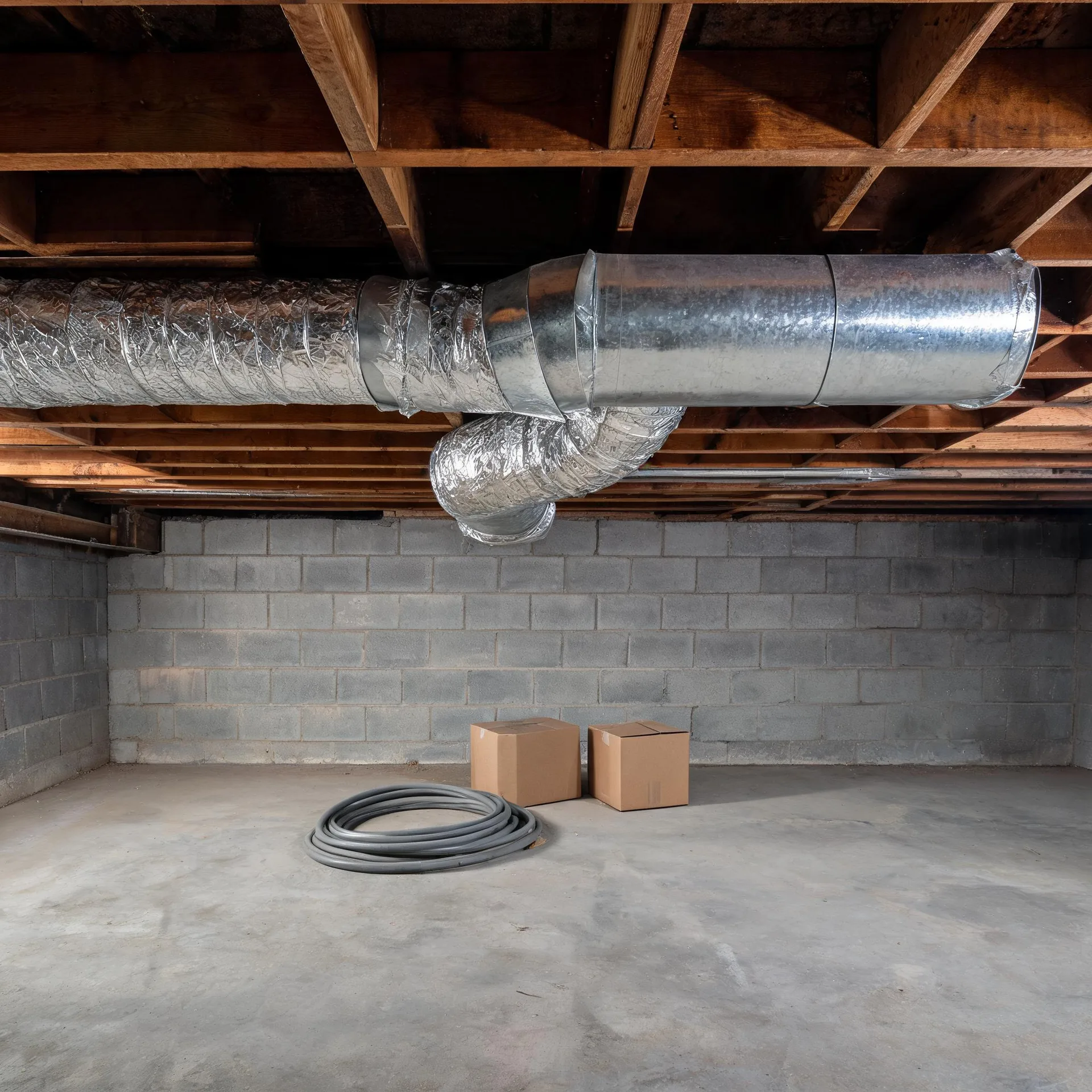
Ductwork laid in for a furnace and central air handles air volume and return paths that suit those systems. A heat pump moves air under different conditions, and ducts routed decades ago for a different load may restrict airflow in ways that change what a contractor can quote or recommend. Half the homes in Harrison County, Indiana were built in 1990 or earlier (2020-2024 ACS 5-year). That puts the existing duct layout at the center of any installation conversation here, before the equipment is even selected. An electrician checking the panel is part of that same early pass.
What a Heat Pump Installation Puts in Your Home
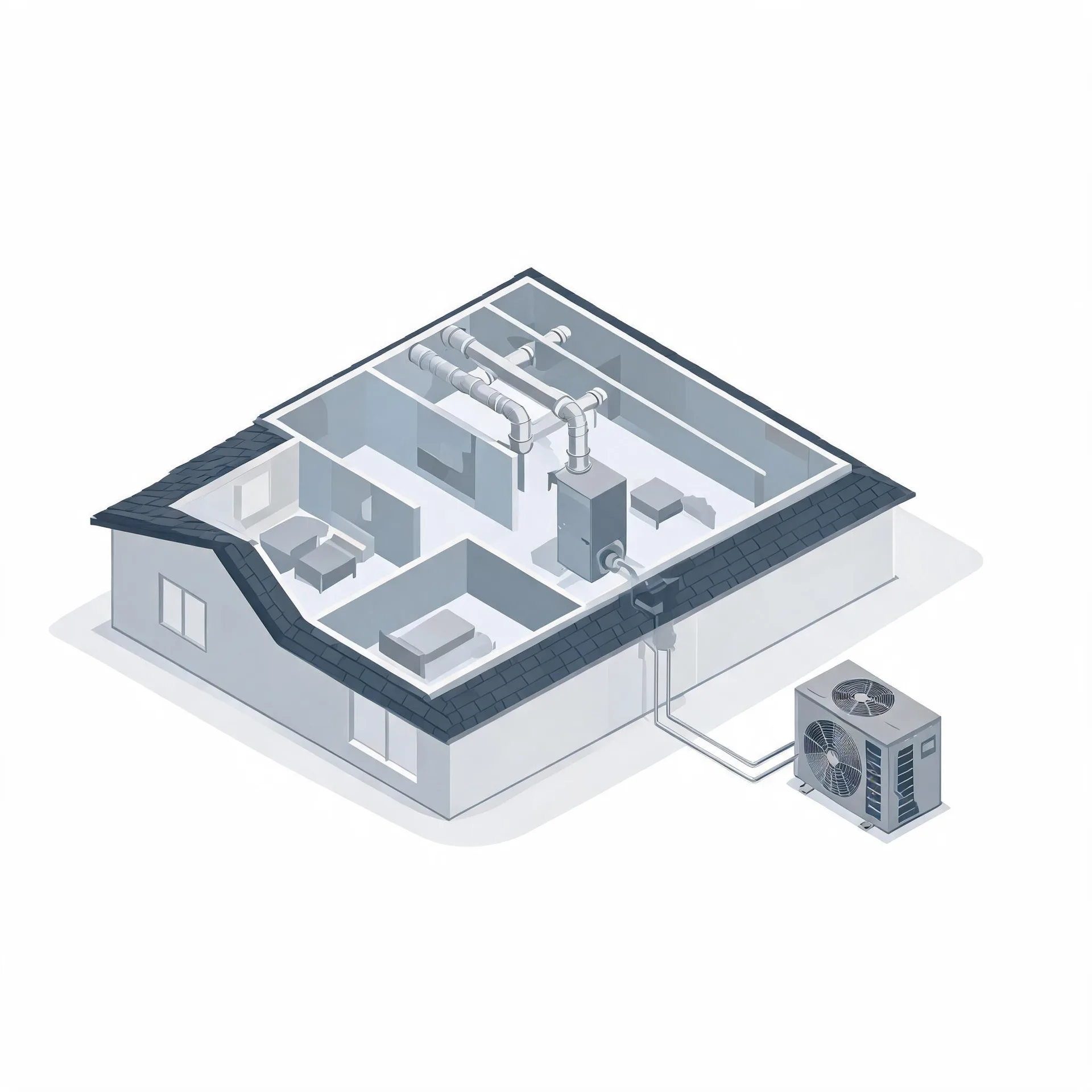
The outdoor unit sits on a pad beside the house and holds the compressor and the condenser coil. The indoor air handler mounts in a utility space, a closet, or an attic and pushes conditioned air through the home. Together these two cabinets are the core of what a contractor installs.
A refrigerant line set runs between the two units, connecting the outdoor pad to the air handler and carrying the working fluid that makes the system function. A thermostat goes on an interior wall and gives the homeowner control over the whole system.
The drawing shows a typical layout, and a licensed contractor determines exactly what applies to your house.
Find a contractor in Harrison CountyHarrison County, Indiana, by the numbers
118 severe weather events were recorded in Harrison County, Indiana between 2015 and 2024.
NOAA National Centers for Environmental Information, Storm Events Database, bulk CSV export, events 2015-01-01 through 2024-12-31.Half the homes in Harrison County, Indiana were built in 1990 or earlier (2020-2024 ACS 5-year).
U.S. Census Bureau, 2020-2024 American Community Survey 5-Year EstimatesHarrison County, Indiana holds 16,953 housing units (2020-2024 ACS 5-year).
U.S. Census Bureau, 2020-2024 American Community Survey 5-Year EstimatesOwners occupy 83.6% of the occupied homes in Harrison County, Indiana (2020-2024 ACS 5-year).
U.S. Census Bureau, 2020-2024 American Community Survey 5-Year EstimatesSevere Weather Events in Harrison County
Harrison County's weather puts real demands on heating and cooling equipment over its working life. A heat pump sized and installed for local conditions handles that load more reliably than one spec'd against a generic baseline.
118 severe weather events, 2015–2024. Source: NOAA National Centers for Environmental Information, Storm Events Database.