Tell us about the job
Takes about a minute. No obligation.
Sizing a heat pump for Owen County starts with what the house demands, not what the sky throws at it. 46 severe weather events were recorded in Owen County, Indiana between 2015 and 2024. At that rate, severe weather is an occasional event here, and a contractor quoting a new install is spending most of their attention on duct layout, load calculations, and how well the previous system was set up. A home where the old unit underperformed almost certainly got there through poor sizing or a sloppy original install, and the new system needs to correct for that from the start.
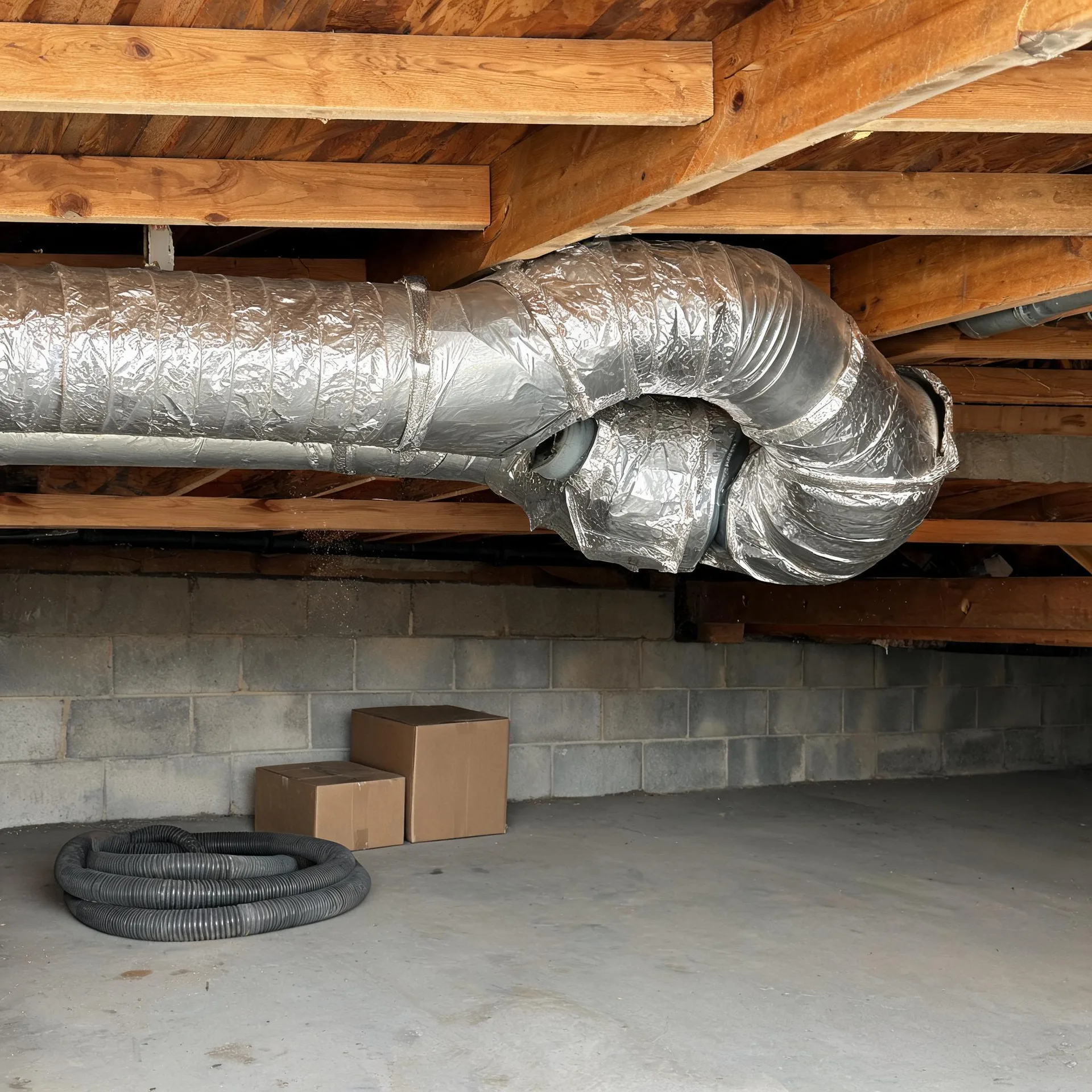
Ductwork in a house from this era was sized and routed for whatever system was standard then, and heat pump airflow demands do not always match what those runs were built to carry. Half the homes in Owen County, Indiana were built in 1982 or earlier (2020-2024 ACS 5-year). A contractor pricing an install here has to open the system, walk the runs, and check the electrical service before the quote means anything, because the gap between what the house was built around and what a heat pump needs is where installations in this county get complicated or straightforward.
What a Heat Pump Installation Covers
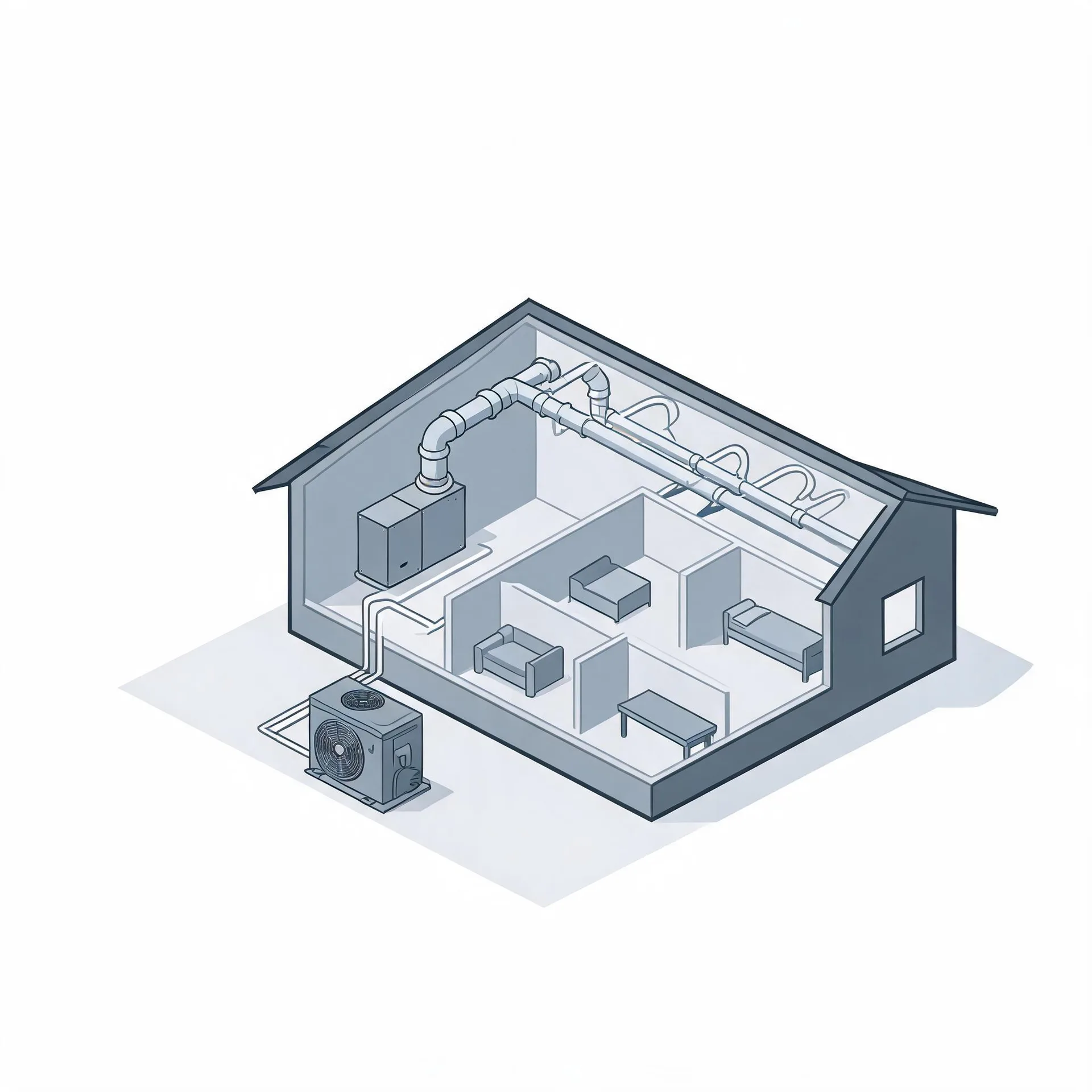
The outdoor unit sits on a pad beside the house and holds the compressor and the condenser coil, which are the parts that move heat between the refrigerant and the outside air. Inside, an air handler mounts in a utility space, a closet, or an attic and pushes conditioned air through the home. These two units are what a contractor brings in and sets in place.
A refrigerant line set runs between the outdoor unit and the air handler, connecting the two halves of the system. A thermostat goes on an interior wall and gives the homeowner control over the whole setup. Where an older system existed, the contractor removes it before the new equipment goes in.
The drawing shows a typical layout, and a licensed contractor determines exactly what applies to your house.
Find a contractor in Owen CountyOwen County, Indiana, by the numbers
46 severe weather events were recorded in Owen County, Indiana between 2015 and 2024.
NOAA National Centers for Environmental Information, Storm Events Database, bulk CSV export, events 2015-01-01 through 2024-12-31.Half the homes in Owen County, Indiana were built in 1982 or earlier (2020-2024 ACS 5-year).
U.S. Census Bureau, 2020-2024 American Community Survey 5-Year EstimatesOwen County, Indiana holds 9,918 housing units (2020-2024 ACS 5-year).
U.S. Census Bureau, 2020-2024 American Community Survey 5-Year EstimatesOwners occupy 81.4% of the occupied homes in Owen County, Indiana (2020-2024 ACS 5-year).
U.S. Census Bureau, 2020-2024 American Community Survey 5-Year EstimatesSevere Weather Events in Owen County
Weather in Owen County puts a measurable load on heating and cooling equipment over time. A heat pump sized and installed for local conditions handles that load more reliably than one spec'd for somewhere else.
46 severe weather events, 2015–2024. Source: NOAA National Centers for Environmental Information, Storm Events Database.