Tell us about the job
Takes about a minute. No obligation.
A heat pump working through regular severe weather accumulates stress that shows up in specific components: coil wear, refrigerant line fatigue, and compressor strain that a single inspection can measure. 175 severe weather events were recorded in Lake County, Indiana between 2015 and 2024. At that rate, a contractor arriving for a repair does not treat each failure as an isolated event. They look for what the cumulative load has done to the system, because in a county with this weather record, wear patterns in the coil and compressor tend to tell the actual story of why the call came in.
Ductwork and electrical in a house this old were put in long before heat pumps were common, and the equipment inside has turned over more than once since. Half the homes in Lake County, Indiana were built in 1968 or earlier (2020-2024 ACS 5-year). A heat pump that has run through many heating and cooling seasons in stock like this accumulates wear in specific places: the compressor valves, the reversing valve, the contacts in the defrost board. When a contractor opens the unit, those components tell the story that decides the repair scope, because parts availability for older refrigerant systems is not guaranteed and a borderline compressor changes the whole conversation about whether repair or replacement pencils out.
The Parts of a Heat Pump a Contractor Checks During Repair
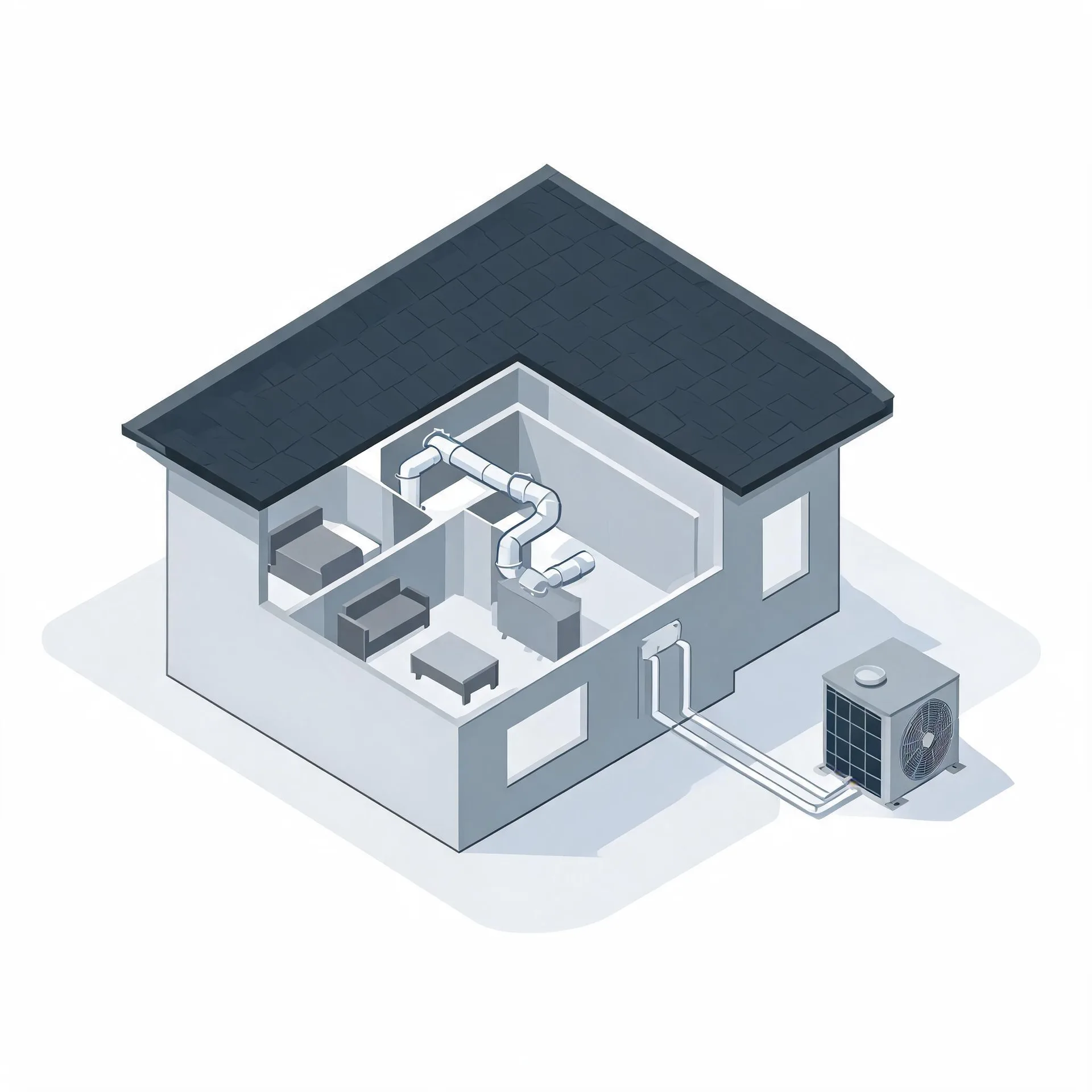
The outdoor unit is the piece most homeowners recognize first. It sits outside the house on a pad or bracket and holds the compressor, the outdoor coil, and the fan. Any of those can be the source of a breakdown, and a contractor works through each one: the compressor for pressure and function, the coil for damage or blockage, the fan motor and blade for wear.
Inside the house, the air handler contains the indoor coil and the blower motor, and it is where refrigerant lines from the outdoor unit terminate. The reversing valve, which determines whether the system heats or cools, sits in the outdoor unit and is one of the first things a contractor checks when a heat pump runs but does not switch modes. The expansion device and refrigerant lines connect both sides and are checked for leaks or restriction.
The drawing shows a general layout of a heat pump system, and a licensed contractor determines which components apply and what work is needed in your specific home.
Find a contractor in Lake CountyLake County by the Numbers
175 severe weather events were recorded in Lake County, Indiana between 2015 and 2024.
NOAA National Centers for Environmental Information, Storm Events Database, bulk CSV export, events 2015-01-01 through 2024-12-31.Half the homes in Lake County, Indiana were built in 1968 or earlier (2020-2024 ACS 5-year).
U.S. Census Bureau, 2020-2024 American Community Survey 5-Year EstimatesLake County, Indiana holds 217,436 housing units (2020-2024 ACS 5-year).
U.S. Census Bureau, 2020-2024 American Community Survey 5-Year EstimatesOwners occupy 71.7% of the occupied homes in Lake County, Indiana (2020-2024 ACS 5-year).
U.S. Census Bureau, 2020-2024 American Community Survey 5-Year EstimatesSevere Weather Events in Lake County
Weather swings put a direct load on heat pump systems, which have to work harder and longer to hold indoor temperatures when outdoor conditions are extreme. How often that happens in Lake County shapes how much wear a unit accumulates and what repair needs tend to look like here.
175 severe weather events, 2015–2024. Source: NOAA National Centers for Environmental Information, Storm Events Database.