Tell us about the job
Takes about a minute. No obligation.
A contractor quoting a heat pump installation in Cass County has to weigh what the local climate asks of the equipment against what the install itself will determine. 81 severe weather events were recorded in Cass County, Indiana between 2015 and 2024. At that rate, severe weather is a real but occasional pressure on a system, not the dominant variable shaping how a unit performs year to year. The choices that matter most here are refrigerant line sizing, proper charge, and how well the unit is set into the structure. A compromised install in a county with this kind of weather record will fail before the weather explains it.
Ductwork laid down for a furnace and central air setup was sized to those systems, and a heat pump moves air differently enough that what is already in the walls sets the terms of the job. Half the homes in Cass County, Indiana were built in 1956 or earlier (2020-2024 ACS 5-year). That gap between the building date and what a heat pump needs is where a contractor spends time before anything else gets priced, checking whether the existing runs, returns, and trunk lines will carry the new load. The electrical panel gets the same look, since original service in stock this age was not planned around the draw a modern heat pump puts on it.
What a Heat Pump Installation Covers
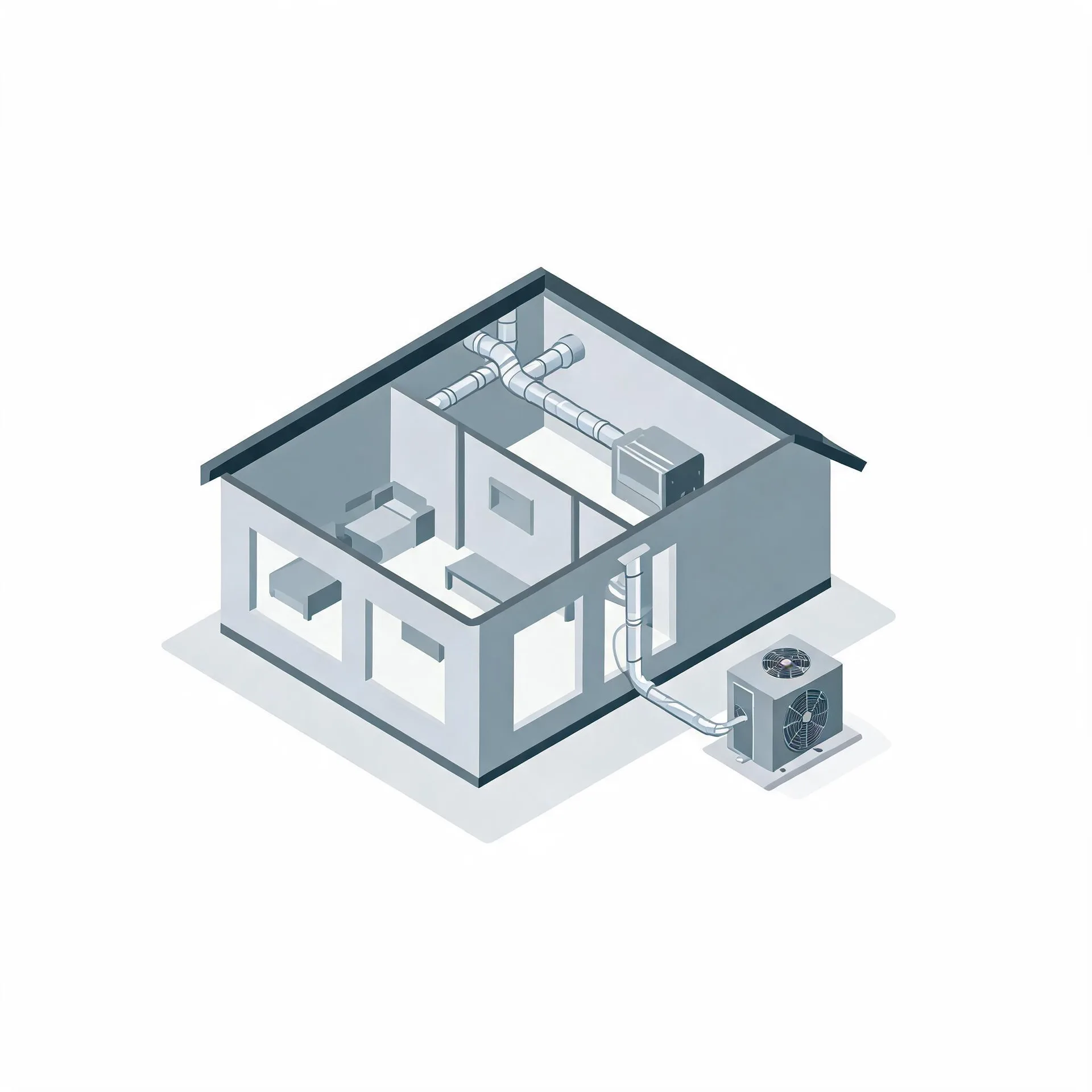
The outdoor unit is the piece most homeowners notice first. It sits on a pad beside the house and holds the compressor and the outdoor coil, which together handle the movement of heat between outside air and the refrigerant running through the system. The indoor air handler mounts in a utility space, attic, or closet and circulates conditioned air through the home.
A refrigerant line set connects the two units, running through the wall or along the exterior to link the outdoor and indoor sides into a single system. A thermostat goes on an interior wall and serves as the control point for the whole setup, letting the homeowner set temperatures and, on many models, schedules.
The drawing shows a representative layout of these components, and a licensed contractor determines exactly what the installation requires for this house.
Find a contractor in Cass CountyCass County, Indiana, by the numbers
81 severe weather events were recorded in Cass County, Indiana between 2015 and 2024.
NOAA National Centers for Environmental Information, Storm Events Database, bulk CSV export, events 2015-01-01 through 2024-12-31.Half the homes in Cass County, Indiana were built in 1956 or earlier (2020-2024 ACS 5-year).
U.S. Census Bureau, 2020-2024 American Community Survey 5-Year EstimatesCass County, Indiana holds 16,388 housing units (2020-2024 ACS 5-year).
U.S. Census Bureau, 2020-2024 American Community Survey 5-Year EstimatesOwners occupy 74.3% of the occupied homes in Cass County, Indiana (2020-2024 ACS 5-year).
U.S. Census Bureau, 2020-2024 American Community Survey 5-Year EstimatesSevere Weather Events in Cass County
Heating and cooling equipment in Indiana works against whatever the local climate demands of it, and storm activity is part of that load. How hard a heat pump has to work, and how long it holds up, is a local question with a local answer.
81 severe weather events, 2015–2024. Source: NOAA National Centers for Environmental Information, Storm Events Database.