Tell us about the job
Takes about a minute. No obligation.
A heat pump sized for a quieter climate will cycle harder, strain its refrigerant circuit, and fall short of its rated lifespan when the weather regularly pushes the system to its limits. 183 severe weather events were recorded in Elkhart County, Indiana between 2015 and 2024. At that rate of severe weather, a contractor quoting a new heat pump in Elkhart County cannot pull a size off a national chart and call it done. The local load shapes the capacity calculation, the refrigerant line decisions, and how the unit is rated for peak demand. Get the sizing wrong and the system pays for it in compressor wear long before the warranty question comes up.
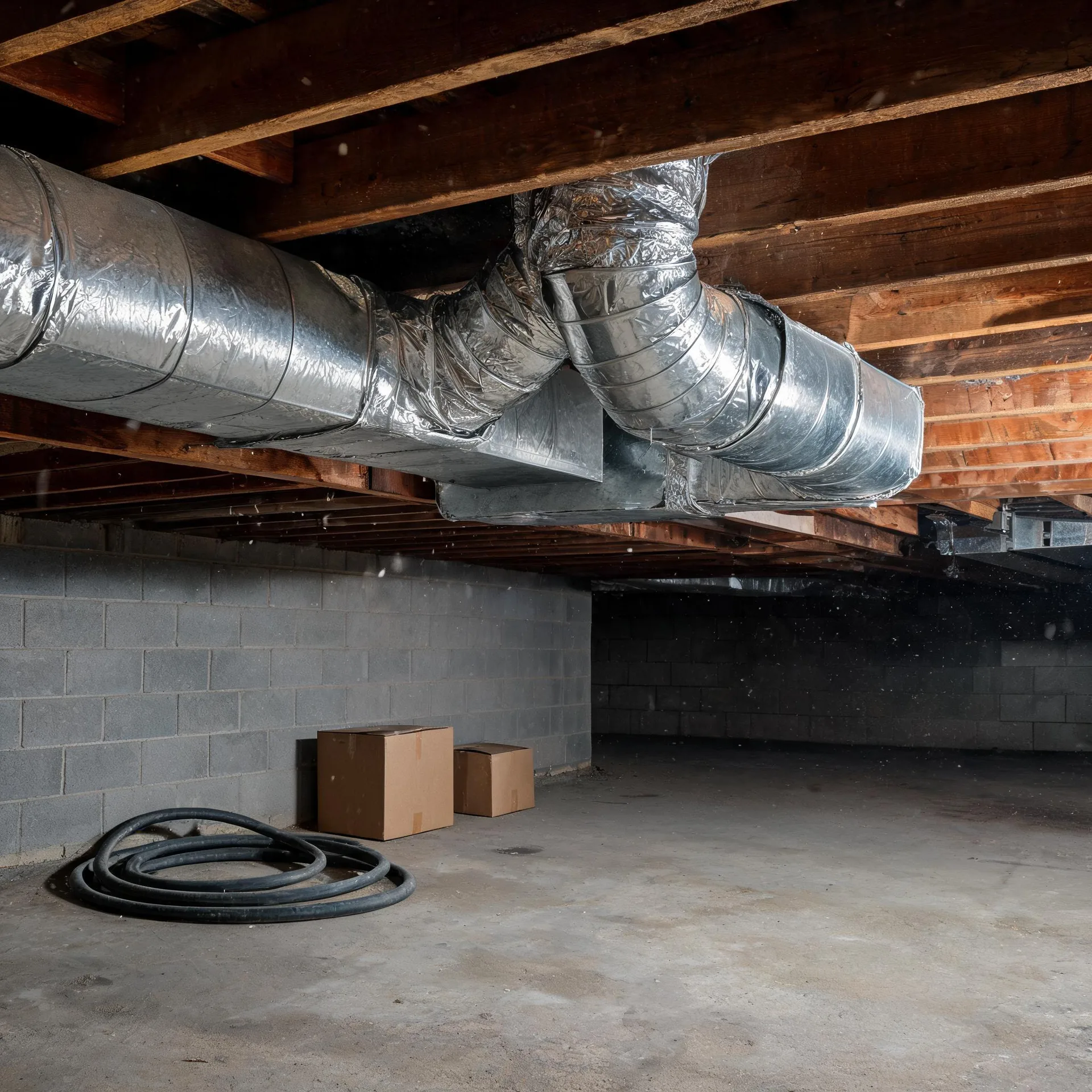
Ductwork laid out for a furnace moves air differently than a heat pump needs it to, and a house built well before heat pump technology was common may have runs, returns, and sizing that a new system will fight against. Half the homes in Elkhart County, Indiana were built in 1977 or earlier (2020-2024 ACS 5-year). A contractor installing a heat pump in stock like this measures and pressure-tests the duct system before the equipment is ever ordered, because a mismatch there changes the scope of the job more than the unit selection does. Electrical service gets checked for the same reason.
What a Heat Pump Installation Covers
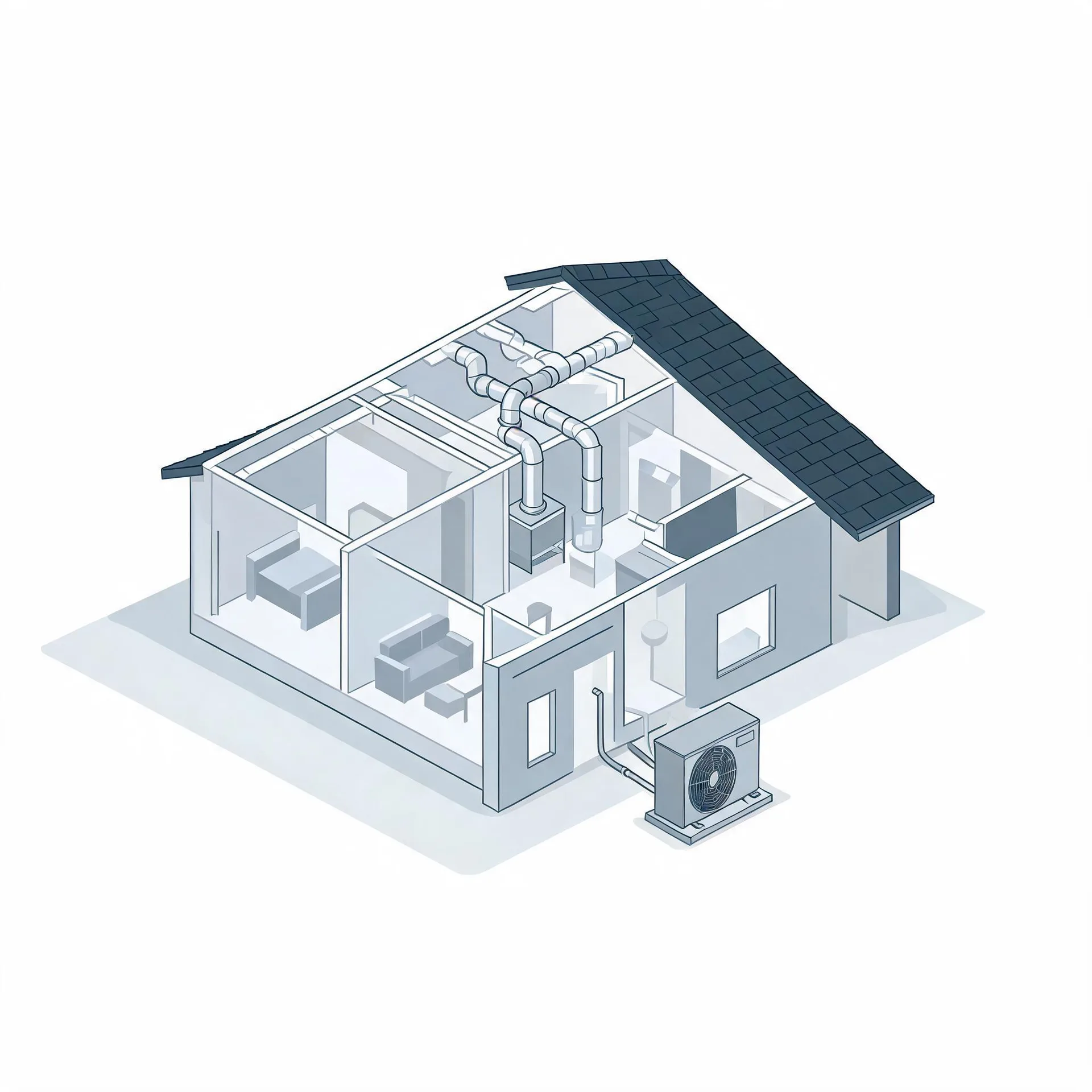
The outdoor unit sits on a concrete pad or bracket outside the house and holds the compressor and coil that do the system's core work. Inside, the air handler mounts in a utility space, closet, or attic and moves conditioned air through the home. Together, these two cabinets are what a contractor brings in and sets in place.
A refrigerant line set runs between the two units, linking the outdoor and indoor sides through a small penetration in the wall. A thermostat goes on an interior wall where it can read the home's temperature and signal the system to run.
The drawing shows a typical layout, and a licensed contractor determines exactly what applies to your house.
Find a contractor in Elkhart CountyElkhart County, by the numbers
183 severe weather events were recorded in Elkhart County, Indiana between 2015 and 2024.
NOAA National Centers for Environmental Information, Storm Events Database, bulk CSV export, events 2015-01-01 through 2024-12-31.Half the homes in Elkhart County, Indiana were built in 1977 or earlier (2020-2024 ACS 5-year).
U.S. Census Bureau, 2020-2024 American Community Survey 5-Year EstimatesElkhart County, Indiana holds 80,493 housing units (2020-2024 ACS 5-year).
U.S. Census Bureau, 2020-2024 American Community Survey 5-Year EstimatesOwners occupy 71.6% of the occupied homes in Elkhart County, Indiana (2020-2024 ACS 5-year).
U.S. Census Bureau, 2020-2024 American Community Survey 5-Year EstimatesSevere Weather Events in Elkhart County
Heating and cooling equipment in Elkhart County works against whatever the local climate puts out, and that workload shapes what a heat pump needs to handle over its life. Weather history is sizing and installation context, not background noise.
183 severe weather events, 2015–2024. Source: NOAA National Centers for Environmental Information, Storm Events Database.