Tell us about the job
Takes about a minute. No obligation.
A contractor quoting a heat pump installation here works from what this county's weather actually demands, not from a standard regional assumption. 108 severe weather events were recorded in Marshall County, Indiana between 2015 and 2024. At that rate, severe weather is a recurring condition of life for any system running in this county, and a unit undersized or poorly sealed at install will feel that pressure across every season it runs. Refrigerant line quality, weatherproofing at penetrations, and the sizing calculation itself are local decisions because the load is local.
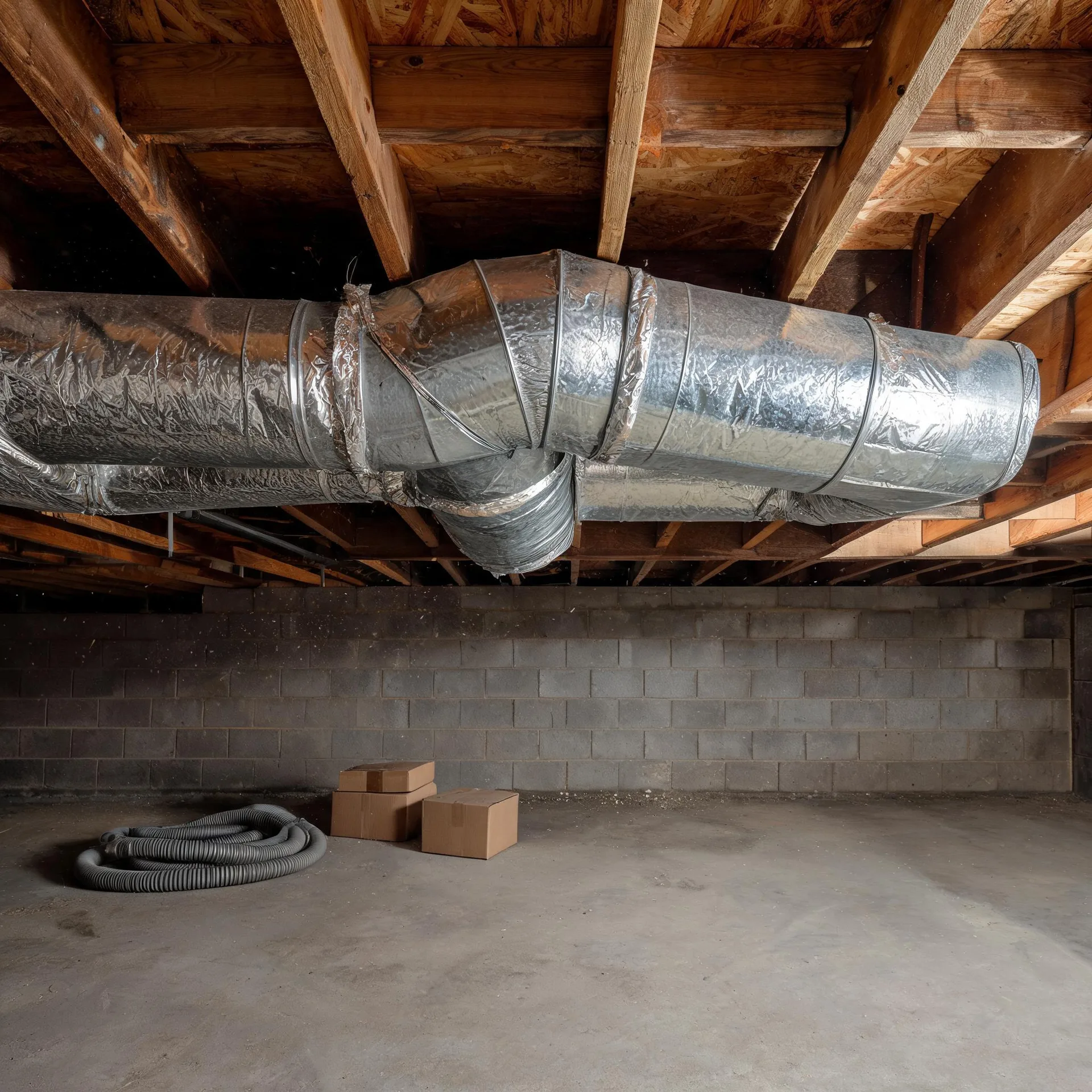
Ductwork laid down for a furnace and window units was built to different pressures, different return paths, and different room-by-room loads than a heat pump moves. Half the homes in Marshall County, Indiana were built in 1973 or earlier (2020-2024 ACS 5-year). A contractor quoting a heat pump installation here pulls flex from the trunk lines before pricing the unit, because what the existing runs can carry determines whether the job is a swap or a rebuild. Electrical service gets the same look: panels from that era routinely predate the dedicated circuits a heat pump requires.
What a Heat Pump Includes and Where Each Part Lives
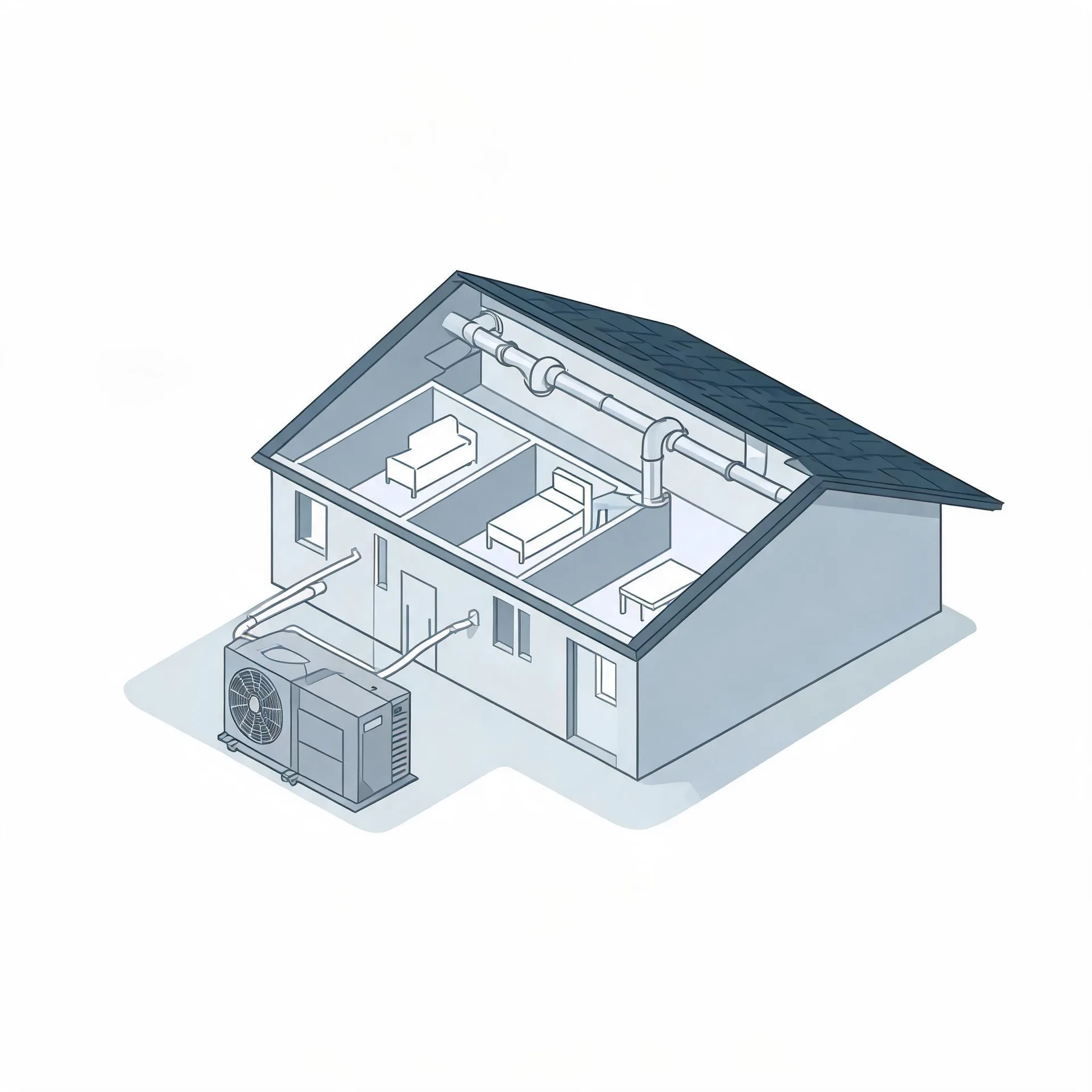
The outdoor unit is the piece most homeowners see first. It sits on a pad beside the house and holds the compressor and the coil that exchange heat with the outside air. Inside, the air handler mounts in a utility space, a closet, or an attic and pushes conditioned air through the home.
A refrigerant line set runs between the two units, carrying the fluid that links the outdoor and indoor sides of the system. A thermostat on an interior wall ties everything together, giving the homeowner a single control point for the whole system.
The drawing shows a typical layout, and a licensed contractor determines exactly how each piece fits the conditions in your house.
Find a contractor in Marshall CountyMarshall County, Indiana, by the numbers
108 severe weather events were recorded in Marshall County, Indiana between 2015 and 2024.
NOAA National Centers for Environmental Information, Storm Events Database, bulk CSV export, events 2015-01-01 through 2024-12-31.Half the homes in Marshall County, Indiana were built in 1973 or earlier (2020-2024 ACS 5-year).
U.S. Census Bureau, 2020-2024 American Community Survey 5-Year EstimatesMarshall County, Indiana holds 20,111 housing units (2020-2024 ACS 5-year).
U.S. Census Bureau, 2020-2024 American Community Survey 5-Year EstimatesOwners occupy 76.4% of the occupied homes in Marshall County, Indiana (2020-2024 ACS 5-year).
U.S. Census Bureau, 2020-2024 American Community Survey 5-Year EstimatesSevere Weather Events in Marshall County
Heating and cooling equipment in Marshall County works against whatever the local climate demands of it, and that demand is shaped in part by how often severe weather moves through. A heat pump sized and installed for actual local conditions performs differently than one spec'd without that context.
108 severe weather events, 2015–2024. Source: NOAA National Centers for Environmental Information, Storm Events Database.