Tell us about the job
Takes about a minute. No obligation.
Sizing a heat pump for Kosciusko County starts with what the climate actually demands, not what a spec sheet assumes. 141 severe weather events were recorded in Kosciusko County, Indiana between 2015 and 2024. At that rate, severe weather is a standing condition for equipment here, and a contractor quotes accordingly: tighter penetration sealing, equipment rated to handle real thermal stress, and a refrigerant charge dialed to local load rather than factory default. A system installed light for the conditions will run harder than it was designed to from the start.
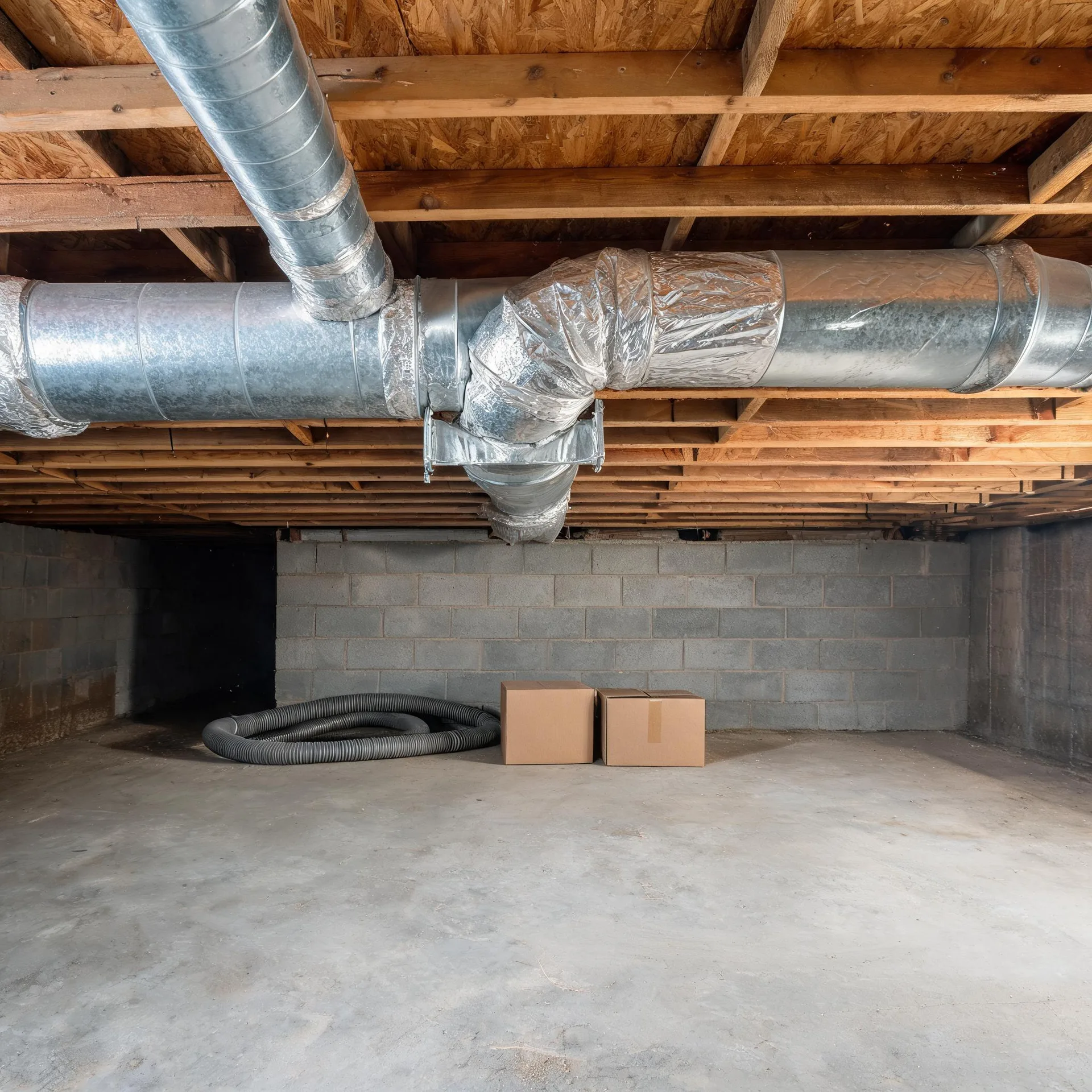
Ductwork laid down for a furnace moves air differently than a heat pump needs it to move. Half the homes in Kosciusko County, Indiana were built in 1979 or earlier (2020-2024 ACS 5-year). That gap between when the house was built and what a contractor is asked to put in it is what drives the scope of an installation here. An electrician can usually upgrade a panel, but ductwork that runs the wrong diameters, takes the wrong turns, or terminates in the wrong rooms forces choices a homeowner should hear before any equipment is priced.
What a Heat Pump Installation Covers, Piece by Piece
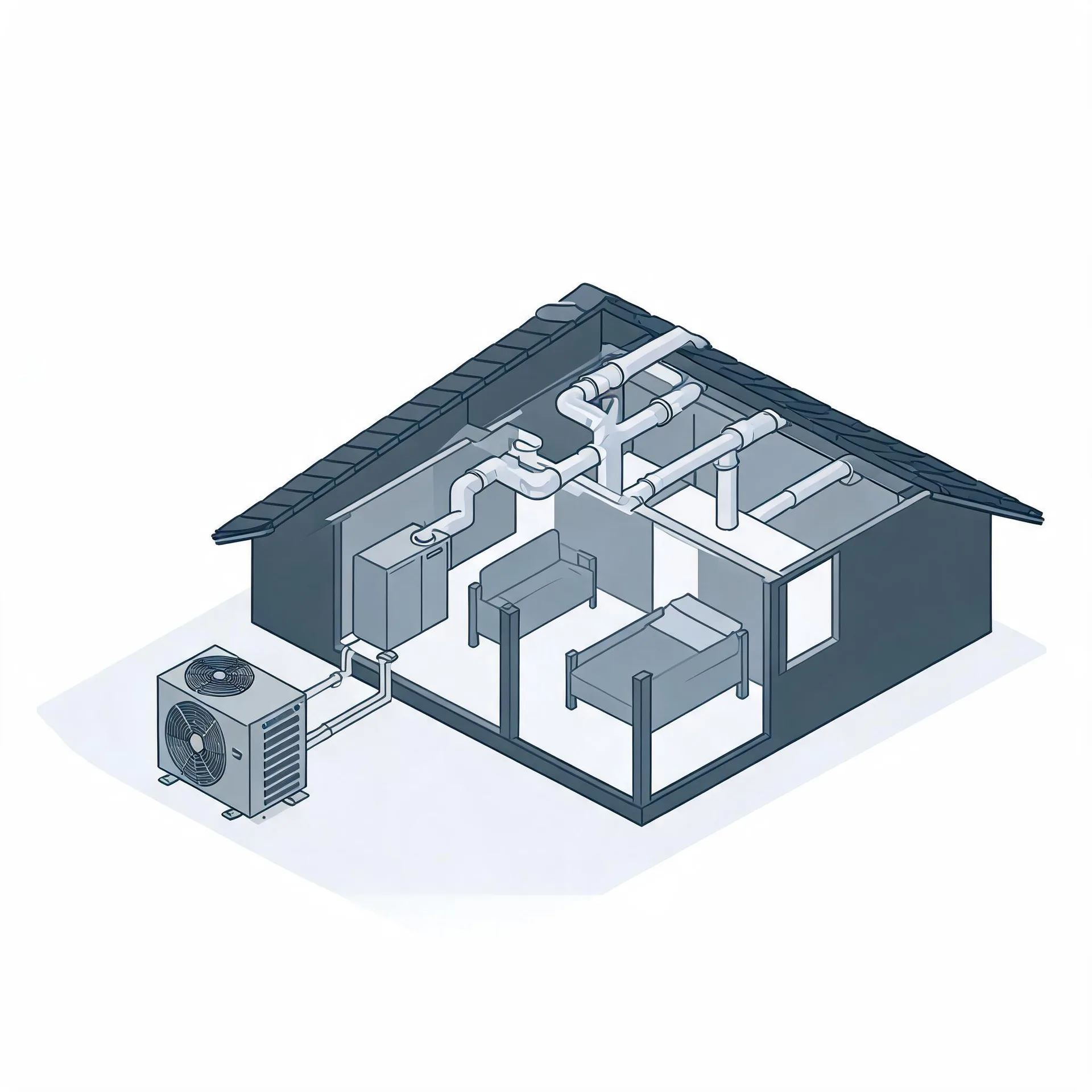
The outdoor unit sits on a pad beside the house and holds the compressor and the coil that pulls heat from outside air. The indoor air handler mounts inside, most often in a utility space, closet, or attic, and moves conditioned air through the home. These two units are the core of what a contractor places and connects.
A refrigerant line set runs between the outdoor unit and the air handler, carrying the working fluid that links the two. An expansion valve, usually housed inside the air handler, controls how that refrigerant flows. A thermostat goes on an interior wall and gives the homeowner control over the whole system.
The drawing beside this text shows a typical layout, and a licensed contractor determines exactly what applies to your house.
Find a contractor in Kosciusko CountyKosciusko County, by the numbers
141 severe weather events were recorded in Kosciusko County, Indiana between 2015 and 2024.
NOAA National Centers for Environmental Information, Storm Events Database, bulk CSV export, events 2015-01-01 through 2024-12-31.Half the homes in Kosciusko County, Indiana were built in 1979 or earlier (2020-2024 ACS 5-year).
U.S. Census Bureau, 2020-2024 American Community Survey 5-Year EstimatesKosciusko County, Indiana holds 38,864 housing units (2020-2024 ACS 5-year).
U.S. Census Bureau, 2020-2024 American Community Survey 5-Year EstimatesOwners occupy 77.0% of the occupied homes in Kosciusko County, Indiana (2020-2024 ACS 5-year).
U.S. Census Bureau, 2020-2024 American Community Survey 5-Year EstimatesSevere Weather Events in Kosciusko County
Outdoor conditions shape how hard a heat pump has to work, and how hard it works over years determines what equipment belongs in that house. Weather history in Kosciusko County is part of what a contractor reads before sizing and installing a system.
141 severe weather events, 2015–2024. Source: NOAA National Centers for Environmental Information, Storm Events Database.